The RESTORE4Cs project marked the successful conclusion of its journey with a final event held in Brussels on 9 December 2025, bringing together the full consortium, Sister Projects (ALFAwetlands, REWET and WET HORIZONS), advisory board, and stakeholders to celebrate achievements, share impacts, and reflect on the legacy of the project.
The event gathered RESTORE4Cs partners in person alongside participants from the ALFAwetlands Sister Project, while coordinators from REWET and ALFAwetlands joined online. The session was further enriched by the participation of the RESTORE4Cs Advisory Board, including Lammert Hilarides (Wetlands International).
The day opened with a comprehensive wrap-up of the project by Ana Lillebø (Universidade de Aveiro), RESTORE4Cs Coordinator, who retraced the project’s journey, key milestones, and the results achieved across science, policy, technology, and society.
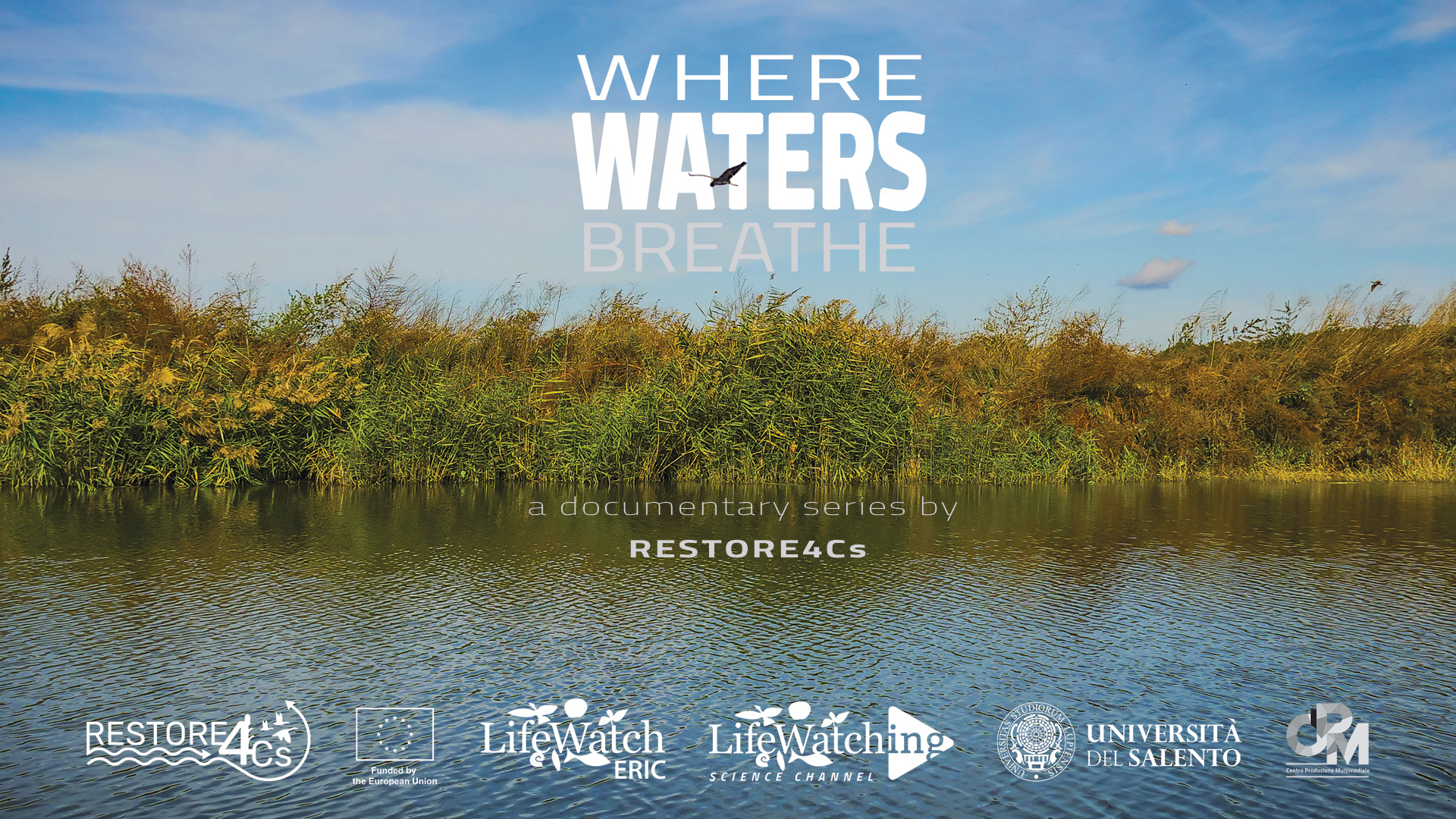
Participants then enjoyed the screening of the Camargue episode of the documentary series “Where Waters Breathe”, produced by Madeira Scauri (LifeWatch ERIC) and Fabrizio Lecce (Università del Salento), a powerful visual narrative highlighting the value of wetland ecosystems.
The scientific impact of RESTORE4Cs was presented by Antonio Camacho (University of Valencia), followed by an in-depth overview of the project’s policy relevance by Eleftheria Kampa (Ecologic Institute), demonstrating how RESTORE4Cs directly supports EU environmental and climate frameworks.
The session on social impact featured contributions from Francesca Rota (CNR-IRCrES) and Auriane Bodivit (Vertigo Lab), who highlighted stakeholder engagement, co-creation processes, and the role of the European Community of Practice (ECoP).
A key highlight of the event was the presentation by Carmela Marangi (CNR) on the technological impact of RESTORE4Cs, showcasing a unique and integrated technological package that includes:
- Multi-scale modelling innovations, integrating biophysical, hydrological, social, and economic dimensions
- Advanced data workflows, including FAIR repositories, remote sensing pipelines, and in-situ GHG tools
- Systems Engineering architecture, enabling modular, transparent, and reusable assessments
- Decision-support tools aligned with EU policy, directly supporting the Nature Restoration Regulation, LULUCF, WFD, MSFD, and the EU Biodiversity Strategy
Together, these elements form a technological ecosystem for wetland restoration that is scientifically robust, operationally scalable, policy-relevant, and stakeholder-inclusive, laying the groundwork for climate mitigation through wetland restoration across Europe.
The environmental impact session, led by Anis Guelmami (Tour du Valat) and Christoph Schröder (ETC-UMA), presented key outputs including:
- Pan-European information layers such as the Wetland Use Intensity Layer
- The Coastal Wetland Ecosystem Condition Assessment
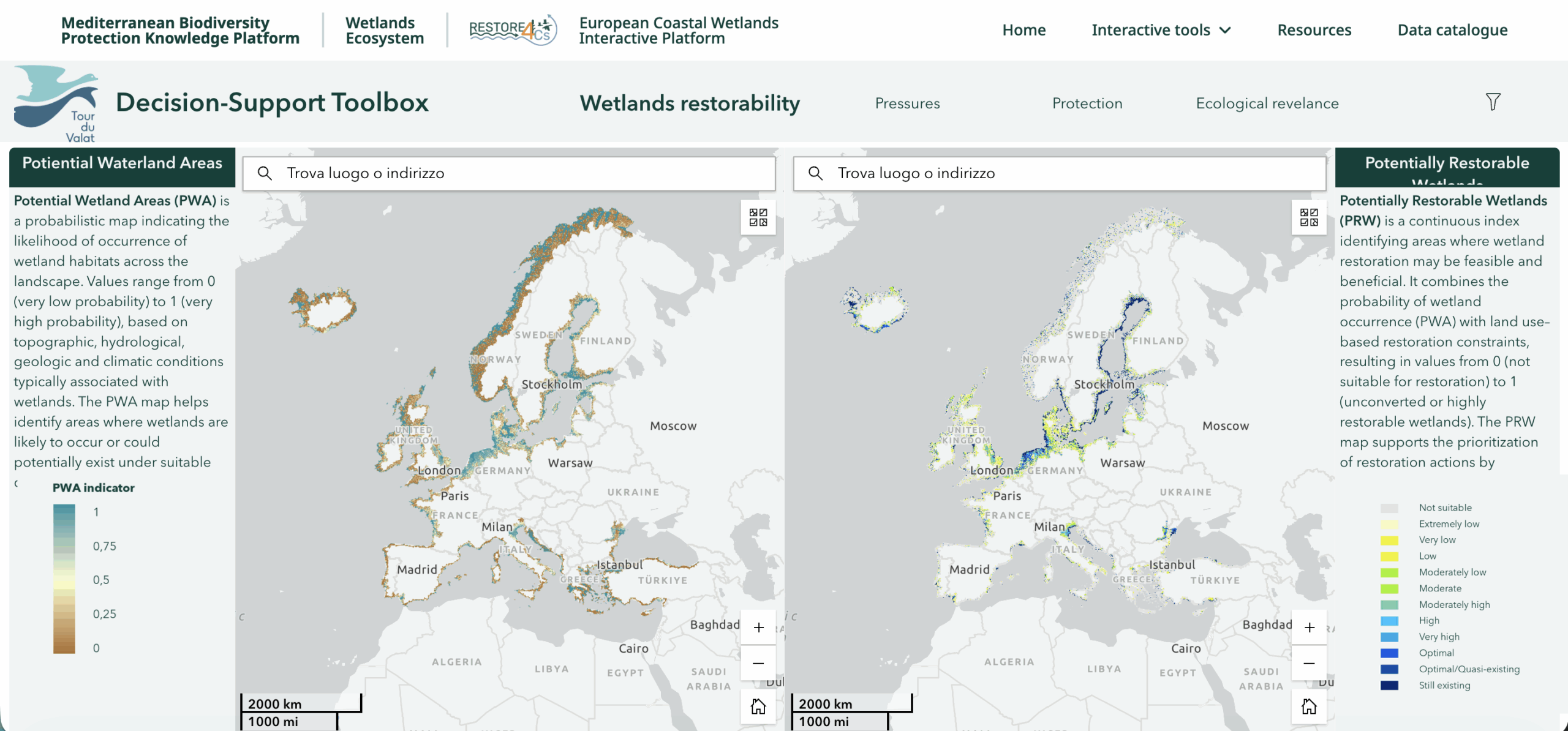
- Mapping of Potentially Restorable Wetlands to support restoration prioritisation
- Integration of results into the RESTORE4Cs Interactive Platform and Toolbox for decision-making
The event concluded in the festive atmosphere of a Christmassy Brussels, providing the perfect setting for partners to celebrate the project’s achievements and toast to the collective work accomplished over the years.
RESTORE4Cs ends with a strong legacy, delivering knowledge, tools, and partnerships that will continue to support wetland restoration and climate action across Europe.