On 19 December 2025, as part of the activities of the European Community of Practice for Restoring Wetlands (ECoP), RESTORE4Cs organised a workshop in response to the need unanimously raised by the stakeholders of the Danube Delta in Romania for sustainable finance mechanisms. The online workshop, coordinated by the Mediterranean Ramsar Regional Initiative (MedWet) with participation of the University of Bucharest, the Danube Delta Biosphere Reserve in Romania, the Managing Authority and WWF Romania, fostered a transnational exchange on solutions for the long-term financing of wetland restoration.
The findings of the comparative analysis of finance schemes in RESTORE4Cs, oulined in this policy brief, point out that although the public sector funding commonly covers the capital costs of coastal wetland restoration, ensuring stable, long-term funding for management and maintenance remains a major challenge. This analysis is particularly aligned with the perceptions of the Danube Delta stakeholders in Romania and is highly relevant to some of the latest developments in the area. Recently, a court ruling has demanded the reconstruction of the Carasuhat dyke, which had breached incidentally in 2023 leading to the passive restoration of approximately 1000 hectares of wetlands. The new legal decision creates a significant financial gap, especially for the Managing Authority, intensified by farmers’ claim for compensation to use the land for conservation purposes.
This controversy was at the core of the participatory workshop held in October 2024, which aimed at collecting information on key challenges and preferences in terms of solutions and management strategies. The obtained insights, combined with the ones collected at the other RESTORE4Cs case pilots, informed the design of the Community of Practice for Restoring Wetlands on a European scale.
In parallel to these activities, the development of the new Community also entailed a review of existing wetland restoration projects across Europe, which shed light on the internationally recognised experience of the Prespa-Ohrid Nature Trust (PONT) in financing large-scale restoration in the transboundary wetlands of the Prespa-Ohrid region between Greece, Albania and North Macedonia. Following the invitation of MedWet, the PONT Trust accepted to share its experience in sustainable finance with the stakeholders of the Danube Delta.
The workshop, organised in connection with the closing event at the Romanian case pilot, offered a synthesis of the results of the analysis of finance schemes in RESTORE4Cs by Wageningen University and Research. This session was followed by a presentation of PONT’s business model by Mirjam de Koning, CEO of PONT, reflecting on the lessons learned in its ten years of existence. In this period, PONT has increased its funding for restoration and conservation by 300%, having secured over €3 million per year in drawdowns until 2040. One key recommendation shared by PONT was the establishment of a Conservation Trust Fund (CTF) which is bound to a geographically specific region.
The workshop also supported a dialogue between the managing authority of the Danube Delta Biosphere Reserve and the Galicica National Park in Macedonia – one of the beneficiaries of PONT, represented by Andon Bojadzi (Head of Conservation), to share challenges and strategies for funding restoration. Notably, the experience of the Galicica National Park showed how funding diversification has made the park more economically independent and less reliant on finance from exploitative activities such as forestry.
Encouraged by these experiences, the stakeholders of the Danube Delta proposed to create a new Working Group of the Community of Practice, led by the team of University of Bucharest and with the participation of the Management Authority of the Danube Delta Biosphere Reserve, WWF Romania, the Horizon project RESTORE4Life and operational support from MedWet.
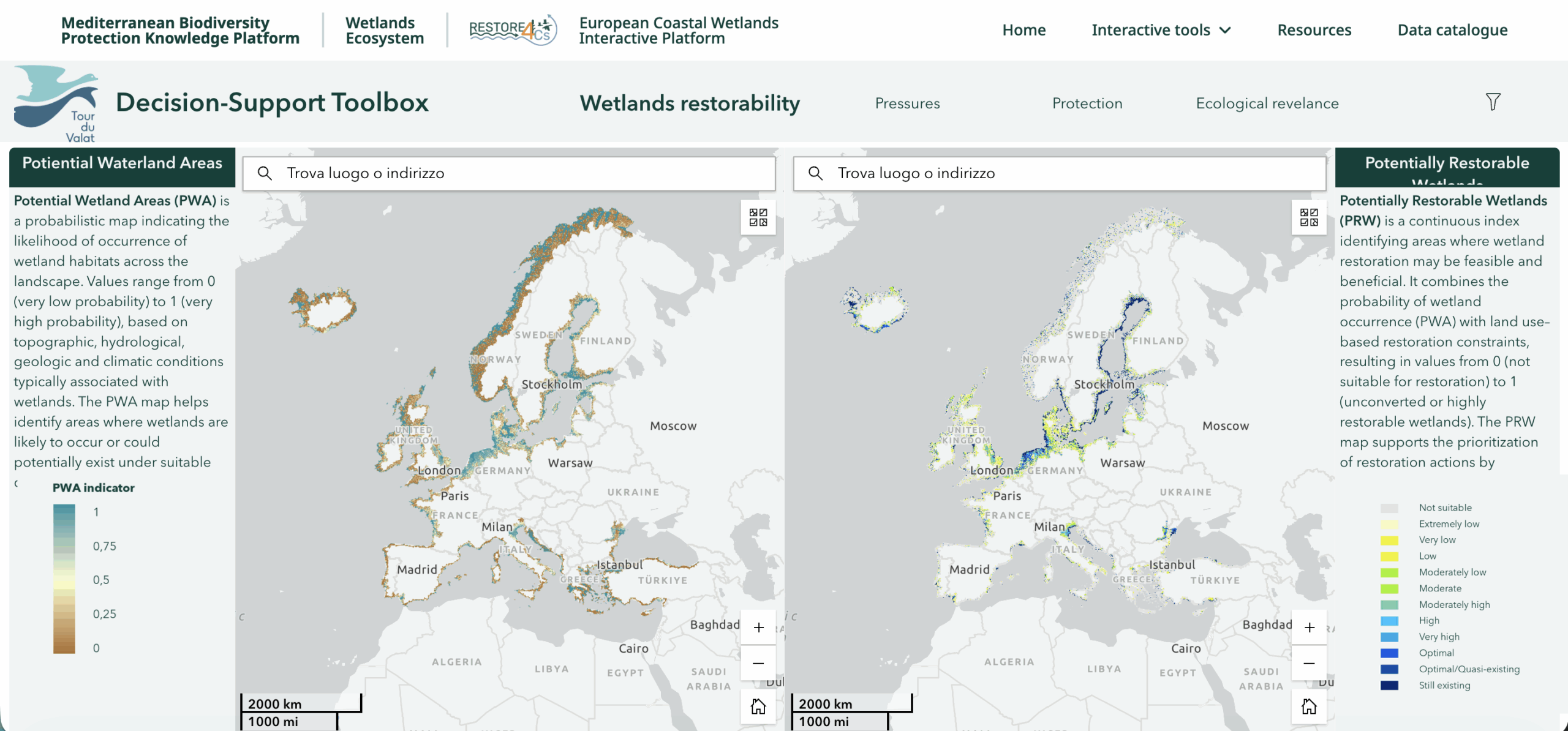
This new Working Group will work towards creating a long-term vision for finance in the Danube Delta in Romania building on diverse funding sources. Moreover, the Working Group will aim to utilise the Integrative Toolbox developed by Tour du Valat, prioritising the areas to be restored based on the potential benefits and cost-effectiveness.
This Working Group is the second to be created as part of the Community of Practice, the frst of which is devoted to the restoration of wetlands for carbon sequestration and GHG mitigation.