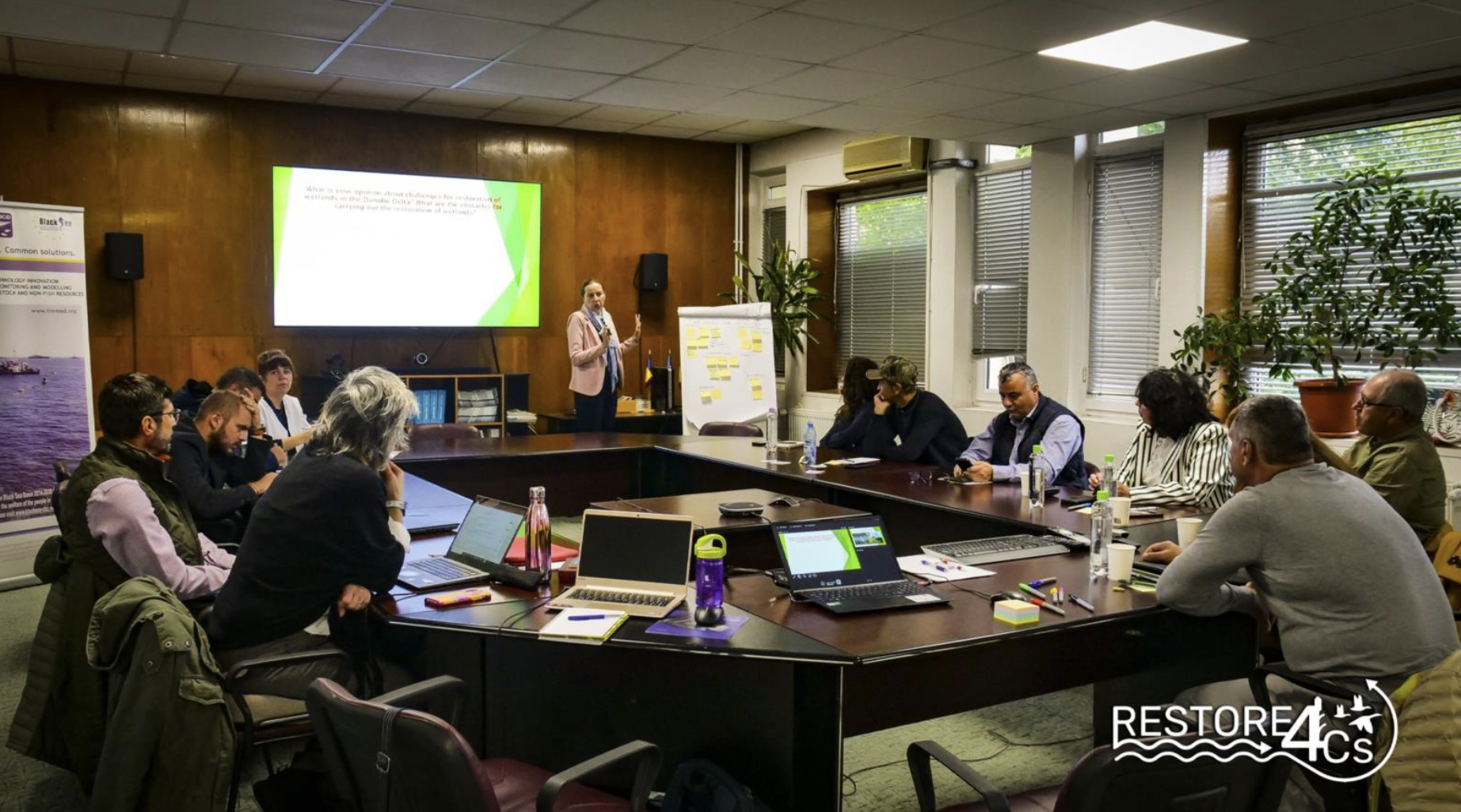
A last participatory moment organised at all six RESTORE4Cs Case Pilots offered an open space to present a curated selection of results from the project and to discuss with key stakeholders their potential for exploitation in each context. Organised in multiple formats to allow for broad and active participation – from in-person to virtual and hybrid – these events made it possible to gather valuable feedback and suggestions to continue fine-tuning the RESTORE4Cs tools and methods, making them more user-centric and intuitive to ultimately promote their uptake and practical application.
Involving stakeholders and end-users in participatory science
Integrating the perspectives of actors from diverse disciplines, governance levels and EU regions in the design of the RESTORE4Cs outcomes has remained an ongoing commitment throughout the life of the project. From the onsite interviews leading to the production of the documentary to the organisation of participatory workshops to analyse different management scenarios at each site or the online workshops to collect the specific needs of policy-science end-users, RESTORE4Cs has contributed to raise interest in the benefits of healthy and restored coastal wetlands, while supporting long-term engagement through sustainability mechanisms, such as the European Community of Practice for Restoring Wetlands (ECoP).
The closing interactions at each of the case pilots marked an important moment to assess how the knowledge collectively generated by the project could be transferred and further utilised by the concerned actors, taking into account their interests and priorities. Despite the diversity of wetland landscapes and social-ecological contexts, one of the results that raised the greatest interest overall was the modelling of land use scenarios, which was widely recognised as a valuable tool for illustrating catchment-lagoon linkages. Across sites, several stakeholders proposed to localise the modelling outputs to specific areas, favouring their application in decision-making contexts. In the Danube Delta, the team of the managing authority of the Biosphere Reserve in Romania showed particular interest in strengthening its technical skills to apply these models, given their potential to optimise its current workflows. In the Curonian Lagoon and Ria de Aveiro, stakeholders proposed to design a process for institutions to access, interpret and request updates or adaptations of the modelling outputs to inform their planning and management activities.
As one of the key results of the project, the results from the analysis of the effects of restoration on the carbon storage capacity and GHG exchanges were considered most valuable for informing global discussions on climate policy as well as for research. The outcomes of this study were deemed particularly useful in sites such as the Valencian Wetlands, where the government plans to include carbon removals from the restored wetlands in the Spanish emissions inventory, or in Camargue, a site for which the study showed distinctive climate benefits linked to GHG mitigation. This research line will continue beyond the end of the project as part of the ECoP Working Group on carbon sequestration and GHG mitigation, with the participation of other Horizon Sister Projects. Regarding the operational application of these findings, various sites recommended developing illustrative management scenarios and simplified visuals to translate these scientific insights into management strategies. In this sense, a resource considered particularly useful was the report containing a typology of wetland restoration actions, which sparked discussions on the restoration priorities at the local and national scale, with a general preference for active restoration measures.
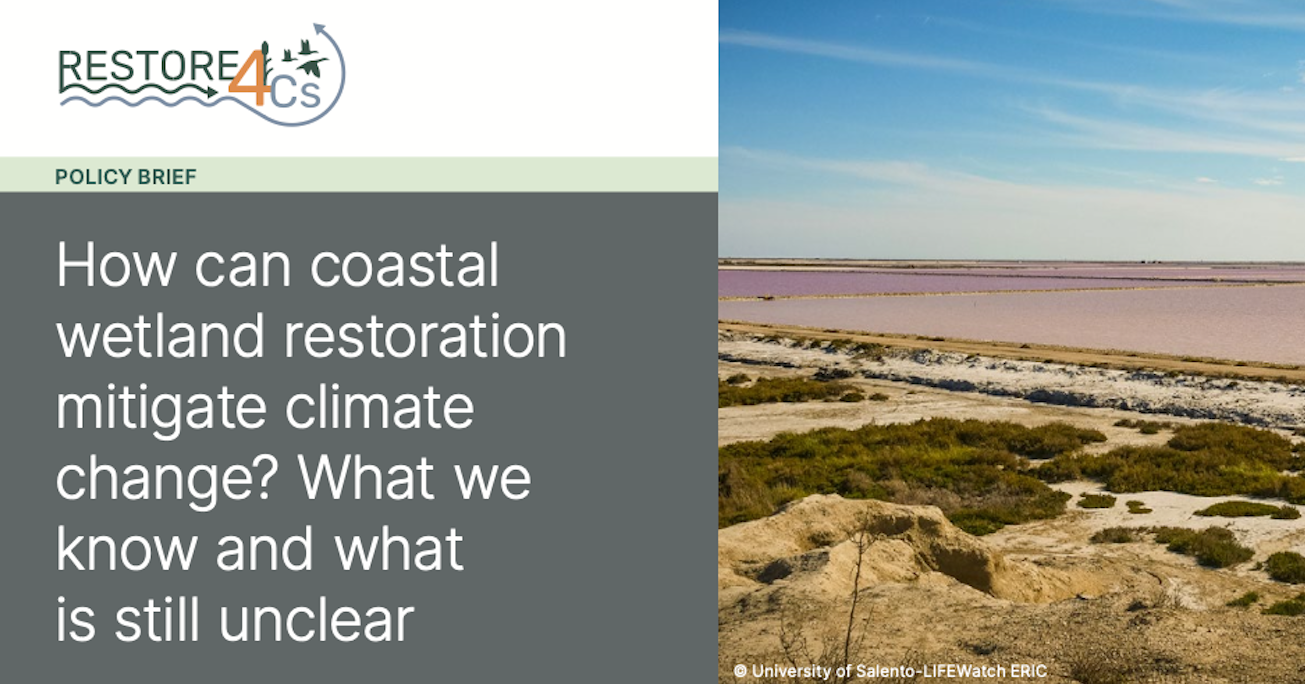
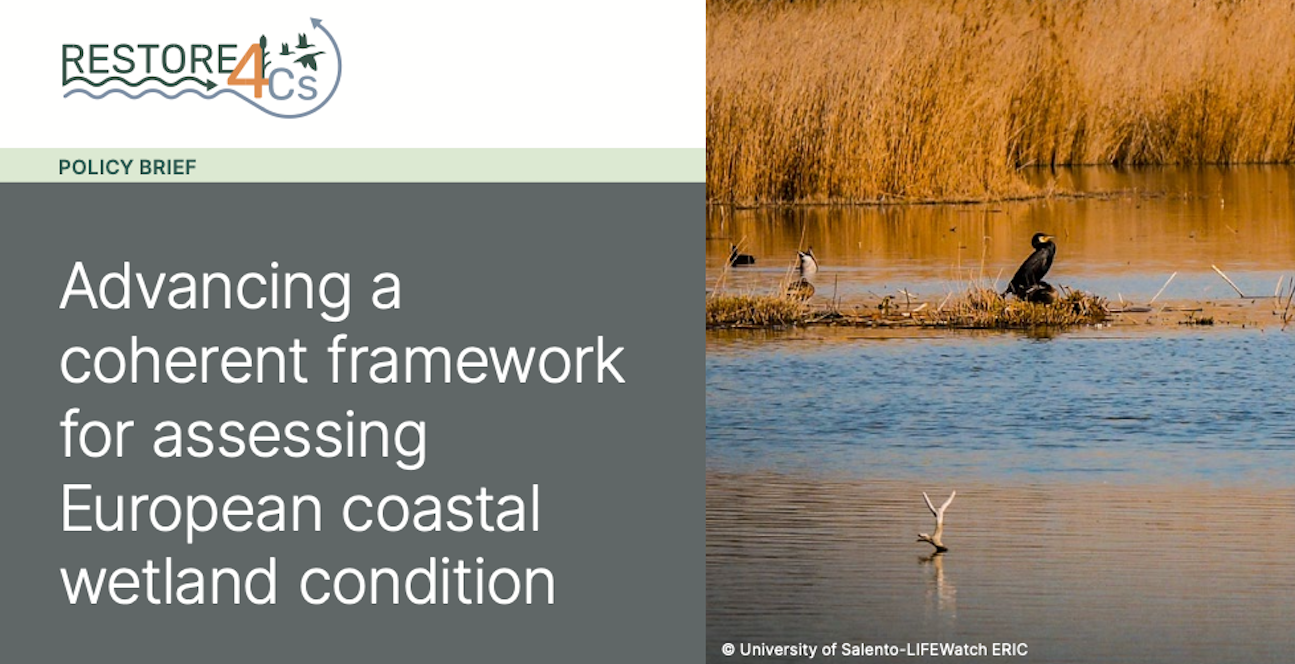
Likewise, the policy briefs produced by the project and translated into the six national languages of the case pilots were welcomed and disseminated during the closing events, including the South-West Dutch Delta, where these were presented during a meeting of the Dutch national network on Natural Capital. In Lithuania, findings on policy inconsistencies, notably the lack of a unified definition of the coastal zone, proved unexpectedly impactful, revealing gaps that potentially might hinder coordinated restoration planning.
These closing events offered the opportunity to gather practical feedback on the usability of the interactive platforms created by the project, namely the European Coastal Wetlands Interactive Platform and the platform of the European Community of Practice. Key recommendations ranged from personalisation based on user roles for the first and the inclusion of a greater number of case studies featuring good practices for the second.
At each of these events, case pilot stakeholders participated in discussions on how to effectively sustain and upscale the exploitation of these results, whether as part of the Living Labs in Portugal and Spain (the latter resulting from the interactions fostered in RESTORE4Cs), the national Nature Restoration Working Group initiated by the Ministry of Environment in Lithuania, the existing national networks in the Netherlands or the ECoP Working Group on Sustainable Finance in the Danube Delta in Romania, which intends to apply the Integrative Toolbox developed by Tour du Valat to guide investments in wetland restoration.